Micro Study Guide
Macro Study Guide
International Trade Guide
Monday, April 18, 2016

Thursday, March 24, 2016
Tuesday, March 22, 2016
Thursday, March 3, 2016
PPP Assignment (Due at End of Class)
For today's assignment, share a Google Doc with me (Mrdasilvasjha@gmail.com) labeled the following: "Measuring Development and PPP Assignment."
#1: Go to http://www.economist.com/content/big-mac-index and complete the following:
#2: Go to Where Are You on the Global Pay Scale?
Read the article and complete the following:
#4: Extra Credit: Go here to see some interesting things about the world's population. Then, Go here to see trends in different development statistics. What is the value of these tools to economists?
#1: Go to http://www.economist.com/content/big-mac-index and complete the following:
- A. In your own words, what is the theory behind purchasing power parity?
- B. What does the Big Mac Index measure?
- C. List two countries in which a Big Mac is more expensive than it is in the US
- D. Why is a Big Mac more expensive in these countries?
- E. List two countries in which a Big Mac is cheaper than it is in the US.
- F. Why is a Big Mac cheaper in these countries?

#2: Go to Where Are You on the Global Pay Scale?
Read the article and complete the following:
- A. What is the total value of world income?
- B. If income were to be divided completely evenly, how much income should each person in the world make?
- C. Why is it difficult to calculate the world's average wage?
- D. What is the world's average yearly salary?
- E. Why is the world's average yearly salary higher than your answer for question B?
- F. Why is PPP important to understanding the value of people's wages?

- a. What is the difference between absolute and relative poverty?
- b. What is the cycle of poverty?
- c. Why might a developing country have a much different value for its GNI/GNP than its GDP? (remember that GDP measures goods produced within borders while GNI/GNP tracks where the profits go)
- d. What are some different health and education measures that economists use? What information do they tell us?
#4: Extra Credit: Go here to see some interesting things about the world's population. Then, Go here to see trends in different development statistics. What is the value of these tools to economists?
Tuesday, February 9, 2016
Commentary Samples
FEEDBACK
Above is the link to the feedback about your article choices. Your assignment today is to write your commentary. If you've forgotten how, below is a quick outline.
I. Introduction (set context and briefly summarize article)
II. Define and explain relevant terms
III. Use and explain diagrams related to the article.
IV. Evaluate different perspectives on the article or economic decisions implicit in the article.
Here is a link to the outline doc we've used before.
Below are some sample Commentaries for this unit and the Google Form Submission.
Sample A
Sample B (Quotas)
Submit a Google Form for your Econ Commentary Article.
If you finish your commentary early, start reading Ch. 27.

Thursday, January 21, 2016
Tuesday, December 1, 2015
Macroeconomics Commentaries
Complete this Form to submit an article.
To see my feedback, click here.
Places to start looking for articles:
BBC News
Assignment: Find at least one article where you could apply about the macroeconomic concepts we've learned about so far in the class
Samples:
Inequality
Unemployment
Inflation
If you finish early, start outlining your commentary more in-depth.
To see my feedback, click here.
Places to start looking for articles:
BBC News
Assignment: Find at least one article where you could apply about the macroeconomic concepts we've learned about so far in the class
Samples:
Inequality
Unemployment
Inflation
If you finish early, start outlining your commentary more in-depth.
Friday, November 20, 2015
Sunday, October 25, 2015
Sample Commentaries
Outline Sheet
Sample #1: Oil
Sample #2: Drought
Sample #3: Electric Cars
Places to start looking for articles:
The Economist (not recommended)
Assignment: Find at least one article where you could apply the concepts we've learned about so far in the class. Once, you have, fill out the the following form.
Here is the list of articles submitted with short comments by Mr. da Silva here.
Sample #1: Oil
Sample #2: Drought
Sample #3: Electric Cars
Places to start looking for articles:
The Economist (not recommended)
Assignment: Find at least one article where you could apply the concepts we've learned about so far in the class. Once, you have, fill out the the following form.
Here is the list of articles submitted with short comments by Mr. da Silva here.
Sunday, October 11, 2015
Assignment for 10/12
READ CAREFULLY!
Materials Required: Externality Notes from Thursday
Setup: Create a Google Document to be shared with Mr. da Silva. Rename that document: "Externality Practice, your name." Title the Document "Externality Practice" at the top and put your name in the top right. Share the document with Mrdasilvasjha@gmail.com.
Record your responses for each question on this document. Answer all questions in complete sentences.
Part 1: Fracking...yes, fracking
 #2: Use a diagram to show how fracking has caused a decline in the price of fossil fuels.
#4: Use a diagram to show the negative externality created from fracking.
#5: What are some things that the government could do to limit the negative effect of these externalities? (what type of regulations should be put in place?)
Part 2: Sodas
#6: What are some of the negative externalities created from a person's decision to consume sugary sodas.
#7: Even though these risks are widely known, why do you think sodas still account for a majority of the calories that Americans consume? (meaning, why do people still drink soda?)
#9. Overall, do you think that taxing soda is a good policy decision for California? Why or why not?
 Part 3: Recycling
#10: What facts were you most surprised by (choose 2-3)
#11: Draw a diagram showing the positive externality of recycling.
#12: When people decide to recycle, what is the cost? (Think in terms of opportunity cost).
#13: What could the government do to create more incentives to recycle?
Extra Credit
If you have finished the minimum wage assignment from last week, you should work on outlining and writing your first commentary.
Alternatively, you can get extra credit by creating a set of questions like the ones you've just done for a topic you're interested in. To do this, think about a topic you have an interest in. Find a couple of articles that identify interesting facts or recent events about your topic. Create 3-4 questions that ask potential students to draw diagrams and think about the costs and benefits of dealing with these issues. Use one of the above topics/questions as samples.
Materials Required: Externality Notes from Thursday
Setup: Create a Google Document to be shared with Mr. da Silva. Rename that document: "Externality Practice, your name." Title the Document "Externality Practice" at the top and put your name in the top right. Share the document with Mrdasilvasjha@gmail.com.
Record your responses for each question on this document. Answer all questions in complete sentences.
Part 1: Fracking...yes, fracking
- Read this article about what fracking is.
 #2: Use a diagram to show how fracking has caused a decline in the price of fossil fuels.
- Read this article about the environmental costs of fracking.
#4: Use a diagram to show the negative externality created from fracking.
#5: What are some things that the government could do to limit the negative effect of these externalities? (what type of regulations should be put in place?)
Part 2: Sodas
#6: What are some of the negative externalities created from a person's decision to consume sugary sodas.

#7: Even though these risks are widely known, why do you think sodas still account for a majority of the calories that Americans consume? (meaning, why do people still drink soda?)
- Read the article about the SWEET act and what voters in Berkeley did in 2014 (read up until the bags of sugar picture)
#9. Overall, do you think that taxing soda is a good policy decision for California? Why or why not?

#10: What facts were you most surprised by (choose 2-3)
#11: Draw a diagram showing the positive externality of recycling.
#12: When people decide to recycle, what is the cost? (Think in terms of opportunity cost).
#13: What could the government do to create more incentives to recycle?
Extra Credit
If you have finished the minimum wage assignment from last week, you should work on outlining and writing your first commentary.
Alternatively, you can get extra credit by creating a set of questions like the ones you've just done for a topic you're interested in. To do this, think about a topic you have an interest in. Find a couple of articles that identify interesting facts or recent events about your topic. Create 3-4 questions that ask potential students to draw diagrams and think about the costs and benefits of dealing with these issues. Use one of the above topics/questions as samples.
Friday, August 21, 2015
Command/Market Economy HW Due Tuesday 8/25
Homework Due Tuesday 8/25
Using pages. 9-11 in your textbook and/or links
posted below, do each of the following:
·
Explain
what a Market Economy is.
·
Explain
what a Command Economy is.
·
Explain
the advantages and disadvantages of a Command economy.
·
Discuss
which one you think is better and why.
Word count: at
least 200 words.
Wednesday, July 8, 2015
Thursday, May 14, 2015
Monday, May 4, 2015
Saturday, May 2, 2015
Monday, April 20, 2015
Sunday, April 12, 2015
Review Sessions
Review Sessions are still scheduled for Monday and Wednesday 10-2.
As far as I've been told, we won't be blasted by fire alarms, but we'll see. If you get here and you hear loud noises, you'll know why I'm no longer there.
As far as I've been told, we won't be blasted by fire alarms, but we'll see. If you get here and you hear loud noises, you'll know why I'm no longer there.
Monday, March 16, 2015
Inequality, Health and Education
Due at End of Class Friday 3/20
Items in Bold are to be emailed to me. Items in Green are to be written on your chart.
Assignment #1: Inequality.
Read the following article about inequality in South Africa. Then, answer the following:

A. What divides the rich from the poor in South Africa?
B. When did South Africa's segregation (Apartheid) system end?
C. What are some examples of evidence that South Africa has been developing?
D. What are some examples of evidence that South Africa is still an undeveloped country?
E. How do you think South Africa's inequality contributes to its lack of development?
In your notes, fill out the last three boxes for #5. Let me know if you need help.
Assignment #2: Health and Education
First, read the the FIRST PAGE of the UNESCO Report on education and development. Then, go to Page 3 of this report.

A. The first article was put out by UNESCO. What is UNESCO?
B. Based on the first reading, what is the relationship between education and growth/development?
C. Provide one piece of evidence from the second reading that health impacts development.
D. Based on the second reading, what is the relationship between health and growth/development?
E. Why is health and education an important issue for economic development?
In your notes, fill out the #6 Health and Education. For terms, simply define literacy (the ability to read and write). Skip identifying a key country.
If you have finished the packet, do the extra credit assignment:
Extra Credit Assignment
 Read The Economist article entitled"For Richer, for Poorer," you can stop at the History section on page 4.
Write a paragraph in which you explain what the article says about the relationship between economic development and inequality, what are the recent trends in regard to inequality in the world today, and if inequality is a problem at all.
Items in Bold are to be emailed to me. Items in Green are to be written on your chart.
Assignment #1: Inequality.
Read the following article about inequality in South Africa. Then, answer the following:
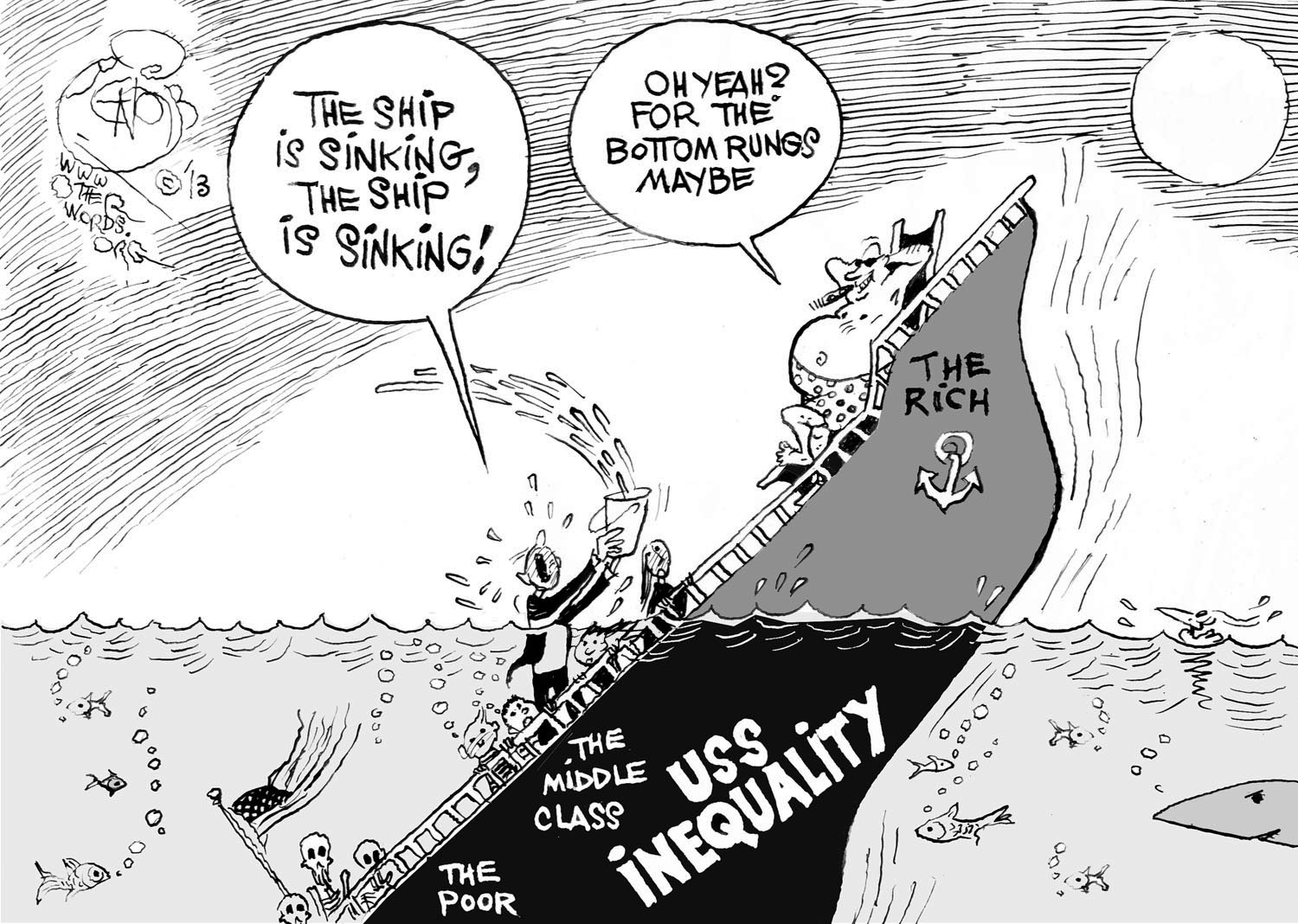
A. What divides the rich from the poor in South Africa?
B. When did South Africa's segregation (Apartheid) system end?
C. What are some examples of evidence that South Africa has been developing?
D. What are some examples of evidence that South Africa is still an undeveloped country?
E. How do you think South Africa's inequality contributes to its lack of development?
In your notes, fill out the last three boxes for #5. Let me know if you need help.
Assignment #2: Health and Education
First, read the the FIRST PAGE of the UNESCO Report on education and development. Then, go to Page 3 of this report.

A. The first article was put out by UNESCO. What is UNESCO?
B. Based on the first reading, what is the relationship between education and growth/development?
C. Provide one piece of evidence from the second reading that health impacts development.
D. Based on the second reading, what is the relationship between health and growth/development?
E. Why is health and education an important issue for economic development?
In your notes, fill out the #6 Health and Education. For terms, simply define literacy (the ability to read and write). Skip identifying a key country.
If you have finished the packet, do the extra credit assignment:
Extra Credit Assignment
 Read The Economist article entitled"For Richer, for Poorer," you can stop at the History section on page 4.
 Write a paragraph in which you explain what the article says about the relationship between economic development and inequality, what are the recent trends in regard to inequality in the world today, and if inequality is a problem at all.
Monday, March 2, 2015
Adopt a Country
Choose a country from the list/map of Medium or Low Development Countries and let me know.
Then, create a document with name: Period 6, Your Name, Your Country
In that document, record the values for your country and then do the same for the United States as a comparison: Use this document as a template or use Google Classroom.
If you were here yesterday, here is Part 2 of the assignment. It will be due next Tuesday.
Then, create a document with name: Period 6, Your Name, Your Country
In that document, record the values for your country and then do the same for the United States as a comparison: Use this document as a template or use Google Classroom.
If you were here yesterday, here is Part 2 of the assignment. It will be due next Tuesday.
Thursday, February 12, 2015
International Trade Commentary
Guidelines:
-Cannot be older than a year.
-Cannot be from the same source you used for the first commentary.
-Must be about International Trade Topics
-Suggestion #1: Search trade restrictions (Tariff, quota, subsidy, etc.)
-Suggestion #2: Search for currencies (choose a country you're interested in and do searches for their currencies)
If you need help finding an article consider these sources:
If you need more information about the commentary, here is all of the official material I have on the subject.
Once you have found an article and checked it with me, you can begin to brainstorm your commentary:
-Summary
-Terms to Define
-Apply terms to article.
-Draw and explain relevant diagrams
-Evaluate
-Cannot be older than a year.
-Cannot be from the same source you used for the first commentary.
-Must be about International Trade Topics
-Suggestion #1: Search trade restrictions (Tariff, quota, subsidy, etc.)
-Suggestion #2: Search for currencies (choose a country you're interested in and do searches for their currencies)
If you need help finding an article consider these sources:
If you need more information about the commentary, here is all of the official material I have on the subject.
Once you have found an article and checked it with me, you can begin to brainstorm your commentary:
-Summary
-Terms to Define
-Apply terms to article.
-Draw and explain relevant diagrams
-Evaluate
Subscribe to:
Posts (Atom)